
Beyond Disclosure: Why Nature Must Become Part of Business and Financial Decision-Making in Thailand

I feel it is safe to say that from almost the beginning of capitalism and mercantilism, much of the business world has treated nature as something outside of the formal economy. Forests, rivers, wetlands, healthy soils, coral reefs and biodiversity have been largely seen as “environmental concerns”, while economic decisions were made in another plane of thinking. Impacts of a business's operations and/or products have, until recently, been viewed as externalities that were not included in their cost accounting or risk assessment. It has been the dominant mental model that companies manage operations, supply chains, markets and finance, while governments and conservation organisations looked after nature. We now understand that this separation is largely artificial, a result of a conditioned perspective. Contrary to this perspective, every economy exists within nature, and businesses ultimately depend on water, land, biological resources, healthy soils, pollination, climate regulation, flood protection and functioning ecosystems. Financial institutions are also exposed to these same dependencies through the companies, projects and sectors that they finance.
When ecological systems degrade and deteriorate, the consequences eventually appear somewhere in the economy through higher costs, disrupted production, damaged assets, declining agricultural yields, supply-chain instability, regulatory pressure, stranded investments and lost livelihoods. I would also say that this understanding is of particular importance for Thailand, as it is one of the world's biodiversity-rich countries, with an array of ecosystems ranging from northern forests and major river basins to mangroves, seagrass beds and coral reefs. These biodiverse living systems support agriculture, fisheries, tourism, food production, water security and millions of livelihoods. Recent Thai biodiversity-finance analysis notes that Thailand ranked 20th globally in biodiversity richness in 2022, while in the same analysis, UNDP BIOFIN indicates that more than 70 percent of Thailand's economy-wide value depends directly on nature, with agriculture, forestry and tourism together contribute nearly 30% of Thailand's GDP. Even with this strong link to nature acknowledge officially, Thailand’s natural wealth is under increasing pressure. This raises a question that is becoming increasingly difficult for business and finance to ignore: what happens when the ecological systems supporting the economy begin to lose their capacity to function?
This is where the Taskforce on Nature-related Financial Disclosures (TNFD) becomes particularly relevant.
What is the TNFD?
The Taskforce on Nature-related Financial Disclosures (TNFD) is a global, market-led initiative designed to help businesses and financial institutions understand and respond to their relationship with nature. Launched in 2021 and modelled in part on the earlier Task Force on Climate-related Financial Disclosures (TCFD), it emerged from a growing recognition that companies and investors cannot properly understand their long-term risks if they continue to treat the natural systems upon which economic activity depends as something outside the financial system.
At its heart, TNFD provides a common framework for organisations to identify, assess, manage and disclose their nature-related dependencies, impacts, risks and opportunities. In practical terms, it asks businesses to look beyond conventional financial information and examine where and how their operations, supply chains and investments interact with ecosystems. A food company, for example, may depend on healthy soils, water and pollination. A hotel or tourism operator may depend on beaches, forests, reefs and attractive landscapes. A bank may have little direct interaction with nature itself, but can have substantial exposure through the agricultural, property, energy, manufacturing or tourism businesses it finances.
TNFD published its final Recommendations in September 2023, structured around four familiar areas of business decision-making: Governance, Strategy, Risk and Impact Management, and Metrics and Targets. This alignment with established climate and sustainability reporting architecture is deliberate. Rather than creating an entirely separate environmental reporting system, TNFD seeks to bring nature-related issues into the same governance, strategy and risk-management processes that companies and financial institutions already use for other financially important issues.
What does TNFD actually ask organisations to do?
The real significance of TNFD is not disclosure itself, but the change in thinking that sits behind it. TNFD asks businesses and financial institutions to understand four connected dimensions of their relationship with nature: their dependencies on nature, their impacts on nature, the risks and opportunities arising from those relationships, and how these should influence business and financial decisions. Its LEAP approach provides a practical pathway for doing this: Locate where an organisation interacts with nature, Evaluate its dependencies and impacts, Assess the resulting risks and opportunities, and Prepare to respond and report.
Importantly, TNFD describes LEAP as an internal due-diligence assessment approach rather than simply a reporting exercise. This is an important distinction.
The LEAP approach is designed to be flexible and iterative rather than a rigid sequence that every organisation must follow in exactly the same way. This distinction matters because a company should not undertake a nature assessment simply because somebody eventually wants a sustainability report. It should do so because understanding its relationship with nature can reveal things about the business that conventional financial analysis has largely failed to see.
Consider, for example, an agricultural company dependent on reliable water, healthy soils and pollination, or a tourism business dependent on beaches, reefs, forests or landscapes, or even a food processor whose supply chain ultimately depends on farmers operating within increasingly stressed watersheds. In each case, the financial risk does not begin when the company writes its TNFD disclosure. It begins when the ecosystem starts losing its ability to deliver on what the business depends upon; i.e. the natural capital and environmental services that nature provides.
From nature dependency to financial risk
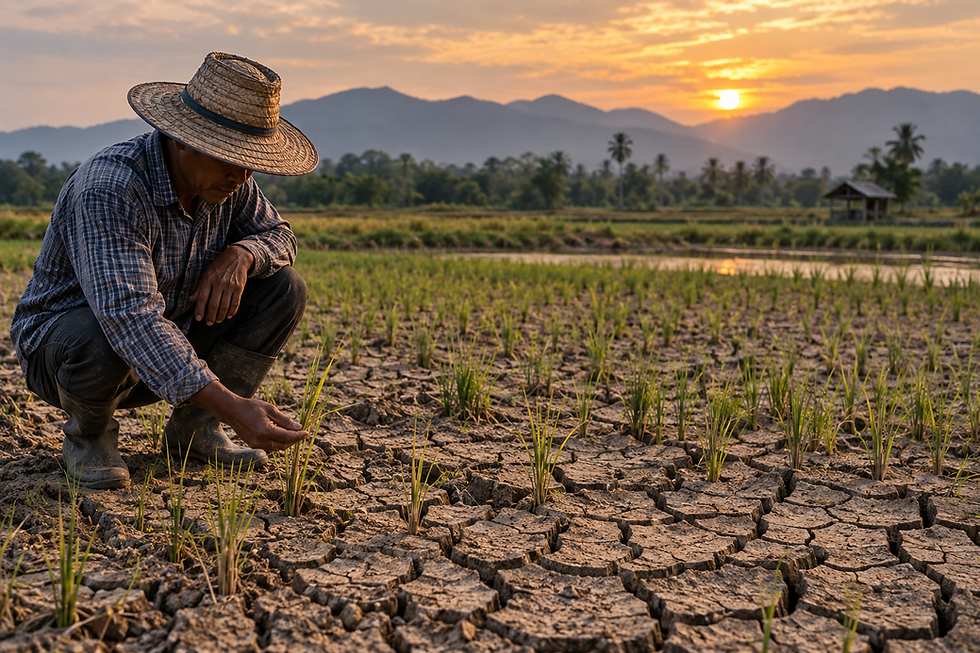
One of the most useful contributions of TNFD is therefore the connection it makes between nature and business value. A company may depend on an ecosystem service such as water while its own activities, or those elsewhere in its value chain, simultaneously impact that ecosystem through excessive natural resource extraction, pollution discharge, or land conversion.
As ecosystem condition deteriorates, what began as a dependency can increasingly translate into operational, financial and reputational risk for business. Water scarcity can raise production costs and disrupt operations, while soil degradation and pollinator decline can reduce agricultural productivity and threaten supply chains. The loss of mangroves can leave coastal businesses and communities more exposed to storms and flooding, while degraded coral reefs can undermine the fisheries and tourism economies that depend on healthy marine ecosystems. Reputational risk can also arise when a company is publicly associated with that degradation. A coastal resort or developer linked to damage to coral reefs or mangroves, for example, may face criticism from local communities and environmental groups, negative media attention, and ultimately a loss of trust among customers, investors and business partners. In each case, the underlying pattern is the same: as nature loses its capacity to function, the businesses and economies that depend upon it become more vulnerable.
The TNFD agribusiness case study on California almonds illustrates this relationship particularly well. Almond production depends heavily on water supply and pollination, meaning that water scarcity and declining pollinator health can become physical and financial risks for this entire industry – not just one company. But the same analysis also reveals new opportunities that derisk this business nature dependency. These include investing in more efficient irrigation, pollinator habitat conservation and ‘regenerative agriculture’ practices. This last point is important because understanding nature-related risk should not end with avoiding damage. It can also help identify better ways of doing business and investing in life itself.
Thailand's biodiversity challenge is also a financing challenge
Thailand is already beginning to confront this challenge. Its National Biodiversity Action Plan and Biodiversity Finance Plan (NBSAP) 2023–2027 provides an important policy and financing framework, while concurrently, the establishment of Thailand's first Biodiversity Finance Unit within the Office of Natural Resources and Environmental Policy and Planning (ONEP) in December 2024 signals a move from planning toward real implementation.
The financing challenge nevertheless remains substantial. The underlying BIOFIN Financial Needs Assessment identified a gap of about US$1.116 billion for the earlier NBSAP implementation period. More recent UNDP reporting now describes Thailand as facing a biodiversity financing gap of approximately US$1 billion per year to implement its biodiversity strategy. Recent analysis also points to declining public biodiversity expenditure as a share of government spending and the continuing need to mobilise much greater private-sector participation.
This is where the story becomes particularly relevant to TNFD. Thailand's Biodiversity Finance Plan does not simply call for more money for conservation. It includes measures intended to bring biodiversity into mainstream business and financial decision-making, including support for Thai TNFD frontrunner companies, capacity building on nature-related disclosure, guidance adapted to the Thai context, and collaboration among government, financial-market institutions, business networks and development partners.
This represents an important shift. Especially as international development assistance aide shrinks, the government cannot finance Thailand's biodiversity transition by itself. However, simply asking the private sector to invest more in nature likely to close the gap is not a viable option at this time. Businesses, banks and investors first need to understand where they depend upon nature, how their activities affect it, and how those relationships translate into financial risks and opportunities. TNFD provides a practical framework for beginning that process. Seen in this context, TNFD is no longer simply another international sustainability framework sitting somewhere on Thailand's future horizon. It is actually beginning to become part of Thailand's emerging biodiversity-finance architecture, helping to connect national biodiversity goals with the everyday decisions that determine what gets built, financed, insured and invested in.
Thailand's financial architecture is also changing
This shift that I describe is occurring alongside wider changes in Thailand's sustainable-finance system. This shift that I describe is occurring alongside wider changes in Thailand's sustainable-finance system. The Thailand Taxonomy provides a common reference for defining and classifying environmentally sustainable economic activities. In simple terms, it provides businesses, banks and investors with a shared system for determining which economic activities can genuinely be considered environmentally sustainable, which are transitioning in that direction, and which are not. This common language can help guide lending and investment decisions while reducing uncertainty and the risk of greenwashing.
Phase 2, published in May 2025, expanded the taxonomy to agriculture, construction and real estate, manufacturing and waste management, and now covers six environmental objectives. These include the sustainable use and protection of marine and water resources and, importantly, the protection and restoration of biodiversity and ecosystems. Phase 2, published in May 2025, expanded the taxonomy to agriculture, construction and real estate, manufacturing and waste management, and now covers six environmental objectives. These include the sustainable use and protection of marine and water resources and, importantly, the protection and restoration of biodiversity and ecosystems.
TNFD performs a different but complementary function. The taxonomy helps financial institutions and businesses understand which activities can be considered environmentally sustainable or transitioning, while TNFD asks them to examine where their activities interact with nature, which ecosystem services they depend upon, how they affect nature, what risks and opportunities arise, and what they should do in response. The LEAP approach provides a practical bridge between these questions and organisational decision-making. Together, these developments point toward something larger than another round of sustainability reporting. Thailand is gradually assembling some of the pieces needed to connect biodiversity policy, business strategy and capital allocation. The challenge now is to make those pieces work together, so that information about the condition of ecosystems begins to influence real decisions about investment, lending, corporate strategy and ultimately the landscapes and ecosystems in which economic activity takes place.
From policy toward implementation
There are encouraging signs that this conversation is developing in Thailand. At the Thailand Nature–Climate Synergies Workshop held in Bangkok in August 2026, government agencies, researchers, private-sector representatives and international partners examined how Thailand could better connect biodiversity and climate policy with implementation and finance. Discussions identified familiar obstacles, including institutional coordination, capacity, monitoring, reporting and financing. The underlying message was important: Thailand does not necessarily lack strategies. The larger challenge is getting institutions, finance and implementation to move together.
Thailand now has biodiversity strategies, climate commitments, sustainable-finance initiatives and growing interest in nature-based solutions and biodiversity finance. The next challenge is how to connect them together in a cohesive framework. For example, how does national biodiversity policy influence corporate strategy? How does information about ecosystem condition influence lending and investment? How do businesses understand where their supply chains depend upon vulnerable ecosystems? How can finance move toward activities that protect or restore the ecological systems upon which economic activity depends? And how do local communities and the people who actually manage landscapes become part of those decisions?
The last question is particularly important. TNFD's guidance recognises the importance of engaging Indigenous Peoples, Local Communities and affected stakeholders, including their roles as knowledge holders and stewards of nature. Nature-related decision-making therefore cannot simply become another technical exercise undertaken by companies, consultants and financial institutions far removed from the landscapes concerned.
But disclosure cannot be the destination
This brings me to what I believe is the larger opportunity here. TNFD is an important development, but there is a danger that organisations will treat it as another reporting framework: assess, measure, disclose and comply. If that becomes the endpoint, much of its transformative potential will be lost. The deeper value of TNFD is the possibility that organisations begin to see themselves differently, not as independent economic machines occasionally interacting with 'the environment', but as organisations embedded within ecological and social systems.
Factories exist within watersheds. Supply chains cross landscapes and ecosystems. Agricultural commodities depend upon soil organisms, rainfall, rivers and pollinators. Coastal assets depend upon mangroves, reefs and functioning shorelines. Financial value ultimately rests, at least partly, upon the continued functioning of these systems. Once we see the economy this way, the question begins to change from 'How do we protect our business from nature-related risk?' to 'How do we build businesses and financial systems that strengthen the living systems upon which they depend?' That is a much more important question.
From resilience to regeneration
Much of today's sustainability language emphasises resilience, which is a strategic move given our current world. Businesses, communities and ecosystems need the capacity to absorb shocks, adapt and continue functioning. But resilience alone is certainly not enough. A degraded ecosystem can remain resilient in a degraded state, just as an economy can become increasingly good at adapting to worsening conditions without addressing why those conditions continue to worsen. This is why I increasingly believe resilience needs a companion concept. This is why I am increasingly pairing resilience with the concept of regeneration.
Regeneration asks us not simply how to withstand ecological decline, but how economic activity can help restore ecological capacity for stewarding life. This leads us to a number of critical questions: Can agriculture rebuild soil rather than merely reduce soil loss? Can investment restore watersheds rather than simply pricing water scarcity? Can coastal development strengthen mangroves and wetlands rather than simply build higher concreate sea walls? Can companies redesign supply chains so that the landscapes supplying their raw materials become healthier over time? And can finance begin rewarding the restoration of natural systems rather than simply penalising their destruction?

Interestingly, this possibility already appears within TNFD's practical material. Its agribusiness case study identifies regenerative agriculture and habitat conservation among potential responses to nature-related dependencies and risks. TNFD itself is not a regenerative-economy framework, and we should not pretend that it is. But it can provide businesses and financial institutions with something essential to that transition: the ability to see where they depend upon nature, where they are changing it, and where those relationships create both risk and opportunity.
A different relationship between business and nature
Thailand has an opportunity to become an important testing ground for this transition. It has extraordinary biological wealth, a sophisticated private sector, a significant domestic financial system, strong agricultural and tourism economies, growing sustainable-finance architecture and increasing policy attention to biodiversity and climate. Thailand also has something harder to quantify, including generations of local knowledge about living within landscapes, forests, watersheds and coastal ecosystems.
The challenge is to connect these worlds. But the pathway is now becoming clearer. TNFD can provide a common language between ecology, business and finance. LEAP can help organisations identify where their most important relationships with nature occur. Thailand's biodiversity policies can establish national direction, while the Thailand Taxonomy and other sustainable-finance mechanisms can influence capital allocation and biodiversity finance can mobilise resources for conservation and restoration. The real opportunity lies in connecting these initiatives rather than allowing them to develop as separate streams of activity.
Ultimately, the goal should not be a company producing a new nature-based report, nor should it simply be a financial institution becoming better at protecting itself from ecological risk. The larger goal should be an economy increasingly capable of maintaining and regenerating the living systems that make economic activity possible in the first place. That requires a progression in how we think. This means seeing nature as an externality, as well as recognising it as a dependency, while understanding the risks created by its decline. Ultimately, it has a good chance for getting business and finance to recognise something deeper; i.e. that the economy is not separate from nature. It is nested within it.
TNFD may prove valuable not simply because it helps organisations disclose that relationship, but because it can help business and finance finally see it, understand it, and begin acting in concert together accordingly.
Selected sources
Author note
Robert Steele advises on biodiversity finance, nature-related disclosure, systems thinking and nature-positive strategy across Southeast Asia through Systainability Asia.


Comments